Thursday, May 14, 2026 - 1 PM EST
The 9 Procurement Cycle Steps
This presentation outlines nine distinct steps in the procurement cycle, starting with need identification and ending with contract close‑out. This approach reflects best practices used across both public- and private-sector procurement functions.
This is a great time to discuss how these steps work in your organization, share challenges, or walk through real examples from your procurement experience.
Why this is a must-see event.
The procurement cycle is a structured process for acquiring goods and services efficiently and responsibly. It matters because it helps organizations control costs, reduce compliance risk, ensure fairness, and maintain operational continuity. Skipping steps often leads to delays, overruns, or audit findings.
- By providing a telephone number and submitting this form, you are consenting to be contacted by SMS text message (our message frequency may vary). Message & data rates may apply. No mobile information will be shared with third parties/affiliates for marketing/promotional purposes. Reply STOP to opt out of further messaging. Reply HELP for more information.
- By providing an email address and submitting this web form, you are consenting to be contacted by email and email marketing communications. You can reply STOP or click the "Unsubscribe" link to opt out of further messaging. Reply with questions for more information.
Why is this so important for effective cash management?
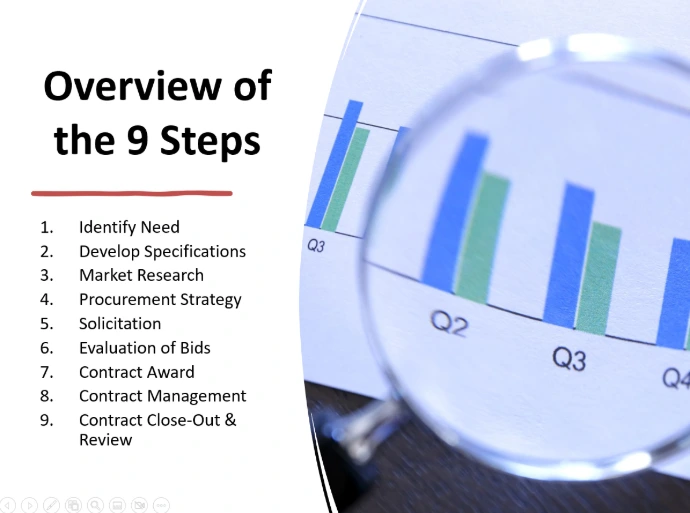
Here’s a high‑level view of all nine steps. Each step builds on the previous one. Weakness in any single step—especially early planning—can impact the entire procurement outcome.
Long-lasting knowledge for improved outcomes
Procurement is not just buying—it’s a structured, end‑to‑end process. Good planning reduces risk and cost, documentation ensures accountability, and continuous review strengthens future outcomes.